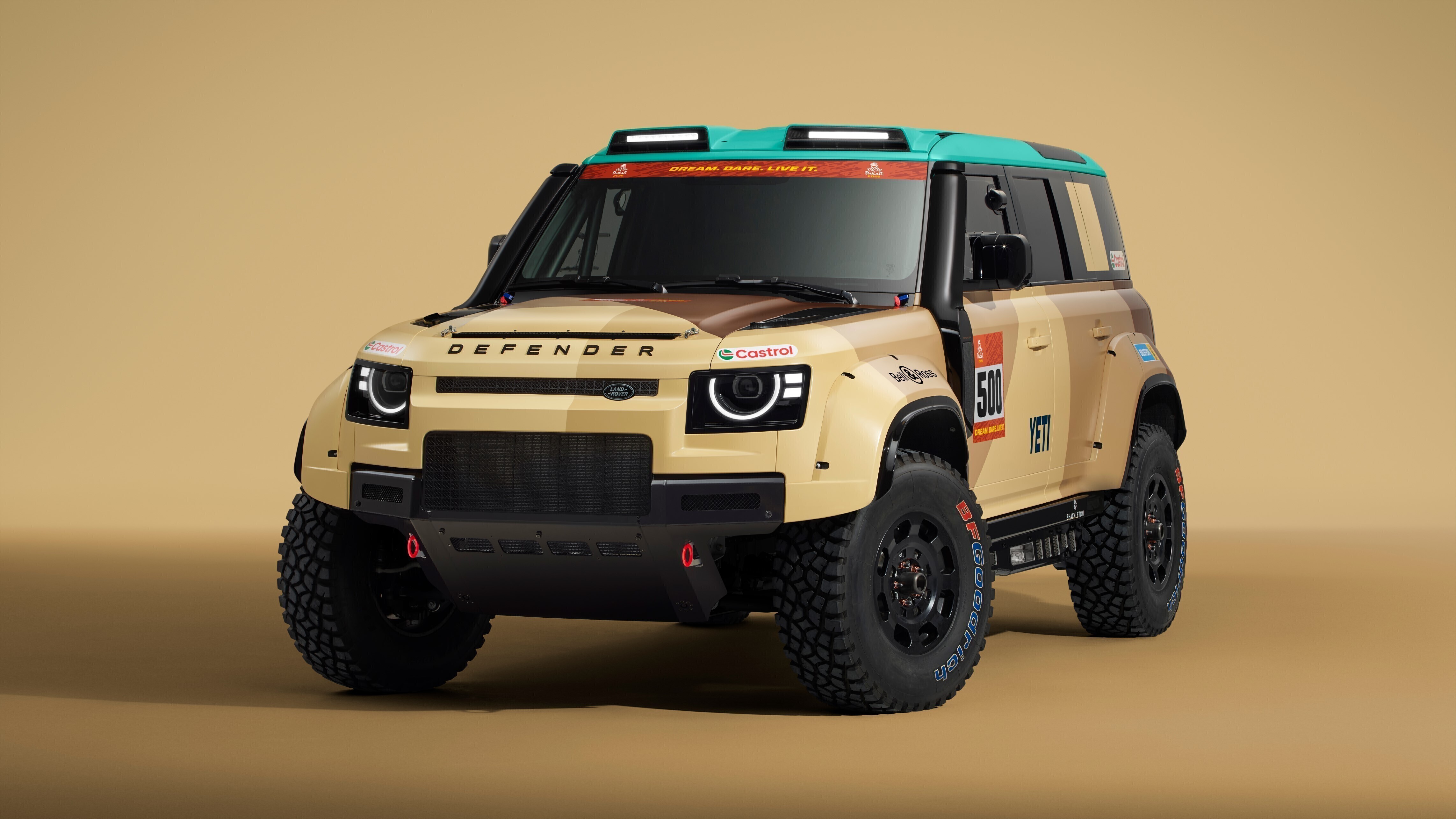
Land Rover’s Dakar Defender: A Factory-Built Off-Road Weapon (For Now)
Land Rover has taken the Defender to a new level with its latest Dakar Rally entrant: the Defender Dakar D7X-R. Built specifically for the sport’s evolving Stock category, this version of the Defender isn’t designed to be a premium road-going SUV with added ruggedness — it’s a dedicated competition vehicle engineered to cope with one of motorsport’s toughest events.
At this stage, it’s not available to buy, and it hasn’t been created with customer ownership in mind. Instead, it exists to prove what the Defender platform is capable of when durability, capability and control become the only priorities.
Designed for Pure Dakar Conditions
The Dakar Rally demands more than power and presence — it requires stability over unpredictable surfaces, long-distance resilience, and the ability to maintain performance when conditions quickly change. The D7X-R has been set up with exactly that in mind.
One of the most talked-about functions is Flight Mode, which reduces the involvement of driver assistance systems to give the driver a more direct and less filtered driving experience. In a setting like Dakar, where terrain and grip levels can shift from second to second, that kind of control matters.
In short, this is a Defender built to handle extreme off-road punishment — not comfort, convenience, or everyday usability.
The Business Case Behind the Dakar Return
Land Rover’s Dakar programme isn’t simply a marketing moment — it’s part of a wider strategy to reinforce the Defender’s reputation globally.
In an interview with PistonHeads, Defender Managing Director Mark Cameron highlighted that Land Rover worked alongside the FIA and ASO to help ensure the Stock category allowed the brand to compete with a vehicle that still retains a strong Defender identity. The aim was clear: race something that remains recognisable and authentic, rather than a purpose-built prototype that only resembles a Defender in name.
That authenticity also feeds into customer interest — and Cameron has acknowledged there is already a strong appetite for customer-accessible versions in the future.
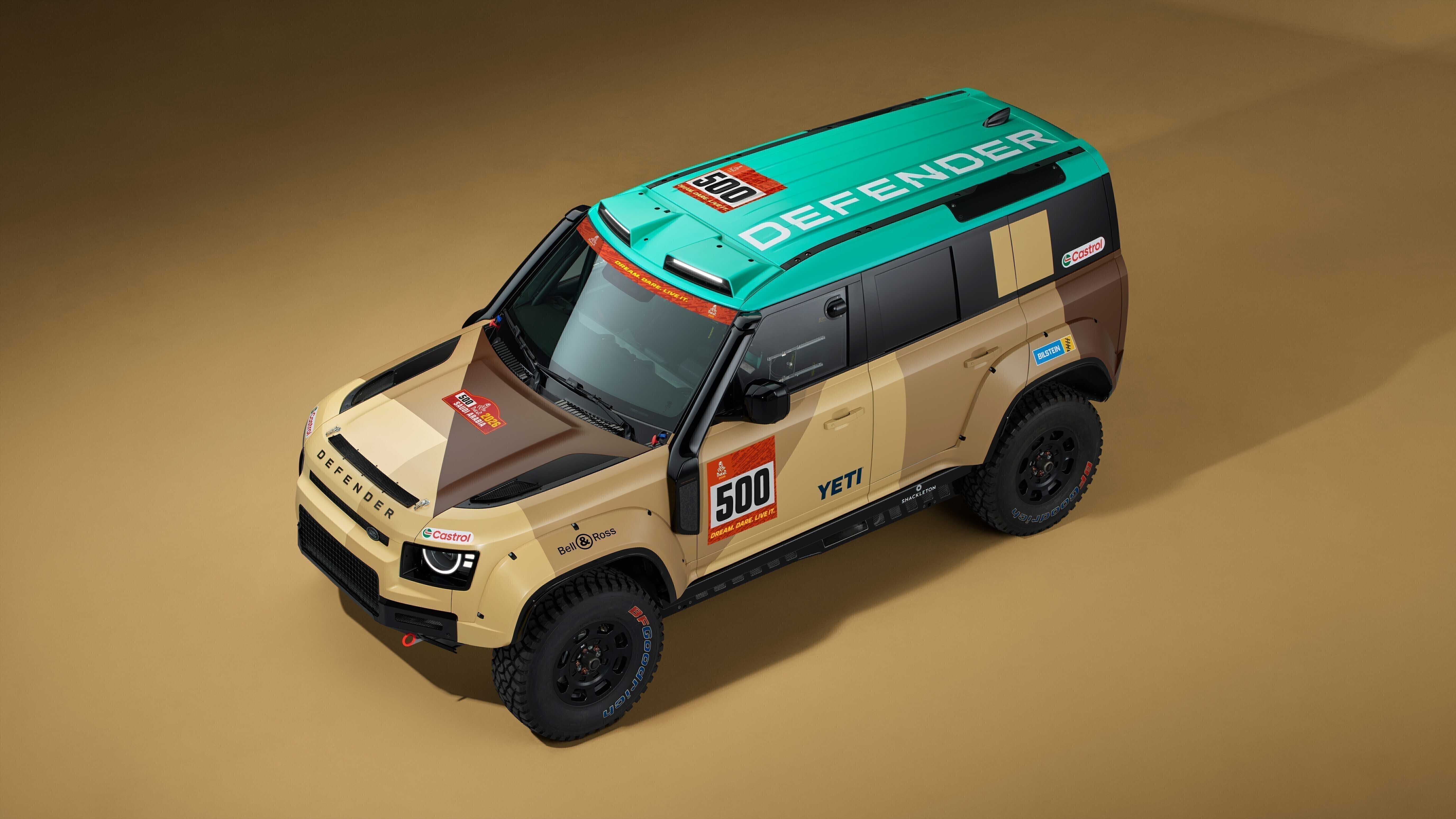
Why Customers Can’t Order One (Yet)
While the demand exists, there are major barriers between the factory Dakar car and a customer-ready version.
One key issue is the price cap for customer rally vehicles, currently around £300,000. That limit makes it difficult for Land Rover to build, supply and support a Dakar-capable Defender to the required standard while staying commercially viable.
There are also wider challenges to consider, including:
emissions requirements
safety regulations
and whether a production-based model could realistically be made road legal
However, Land Rover’s exclusive Dakar branding rights for the next three years could indicate that the company is seriously exploring what could come next — potentially opening the door to a limited-run model inspired by the D7X-R.
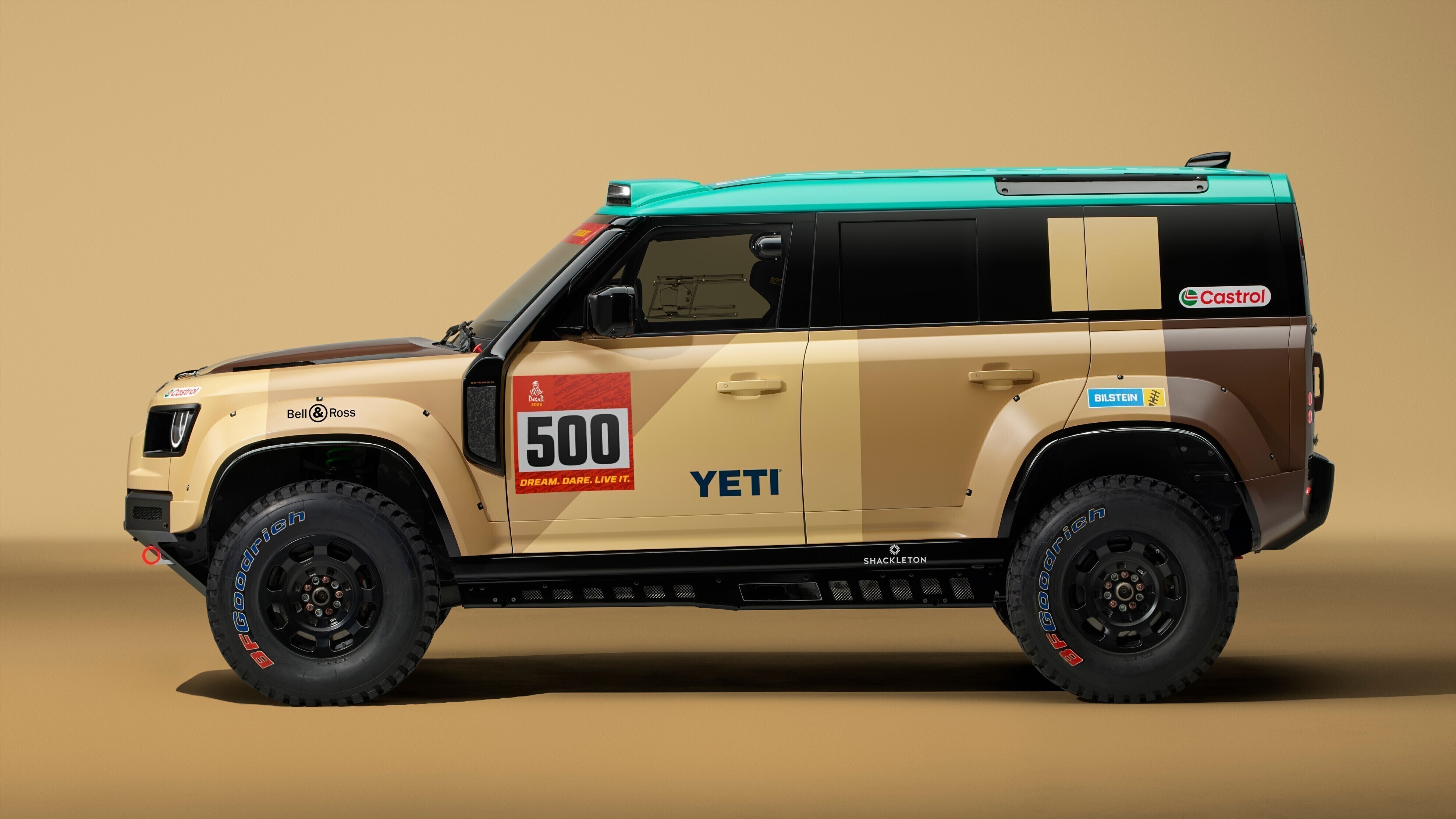
How It Compares to the Defender OCTA
Although the Defender Dakar D7X-R is closely related to the Defender OCTA, their engineering priorities are completely different.
Both vehicles use a twin-turbocharged 4.4-litre V8 paired with an eight-speed automatic transmission, but Dakar regulations restrict the D7X-R to around 390 horsepower. The road-going OCTA produces 635 horsepower, giving it a significantly different performance profile.
The Dakar car also features a shorter final drive and a maximum speed of approximately 106 mph, reflecting its role as an endurance-focused rally machine rather than a high-speed road SUV.
Where the OCTA leans on modern road technology, the D7X-R removes key road-focused systems in favour of simpler, more robust rally-ready hardware. That includes:
mechanical limited-slip differentials
hydraulic steering
and a simplified electronics package designed to survive Dakar-level punishment
Its off-road hardware is equally serious, running:
35-inch tyres
a 145-gallon fuel tank
and up to 14.6 inches of ground clearance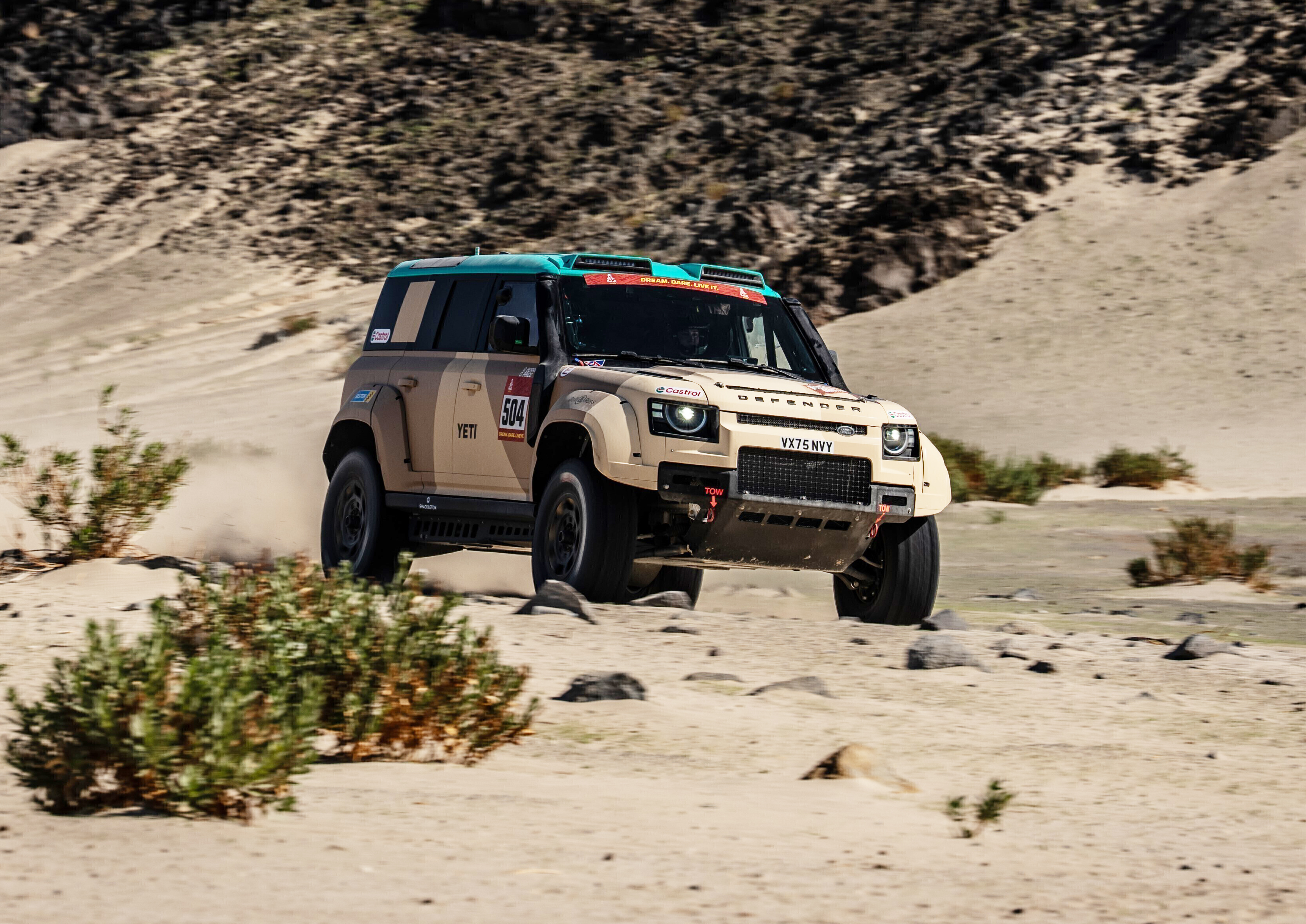
Could We See a Road-Going Dakar Defender?
For now, the Defender Dakar D7X-R remains a factory competition vehicle — exclusive, uncompromising, and built purely for the rally environment. But with clear customer interest and Land Rover actively discussing long-term possibilities, the idea of a customer version or limited production spin-off doesn’t feel unrealistic.
If it happens, it would likely become the most focused and rarest Defender in the line-up — a true Dakar-inspired flagship built for those who want the best, regardless of cost.
Credits for images go to Land Rover