










HMRC Mileage Rate Increase 2026: What It Means for Drivers and Businesses

HMRC Mileage Rates Have Finally Changed
For the first time in 15 years, HMRC has increased the approved mileage allowance rate for cars and vans. From 6 April 2026, the rate for the first 10,000 business miles in a tax year has risen from 45p per mile to 55p per mile. The rate for mileage above 10,000 business miles remains unchanged at 25p per mile.
This change has been backdated to the start of the 2026/27 tax year, meaning it applies from 6 April 2026. For employees and business owners who regularly use their own vehicles for work, this could make a noticeable difference.
What Is the HMRC Approved Mileage Allowance?
The HMRC approved mileage allowance is the amount an employer can reimburse an employee tax-free when they use their own vehicle for business journeys.
It is designed to help cover the cost of business travel, including fuel, servicing, insurance, wear and tear, and general running costs. For years, the main rate for cars and vans remained at 45p per mile for the first 10,000 miles, despite rising vehicle costs across the UK.
Now, with the new 55p rate, employees using their own car or van for work can receive a higher tax-free reimbursement for business mileage.
The New HMRC Mileage Rates for Cars and Vans
From the 2026/27 tax year, the approved mileage rates for cars and vans are:
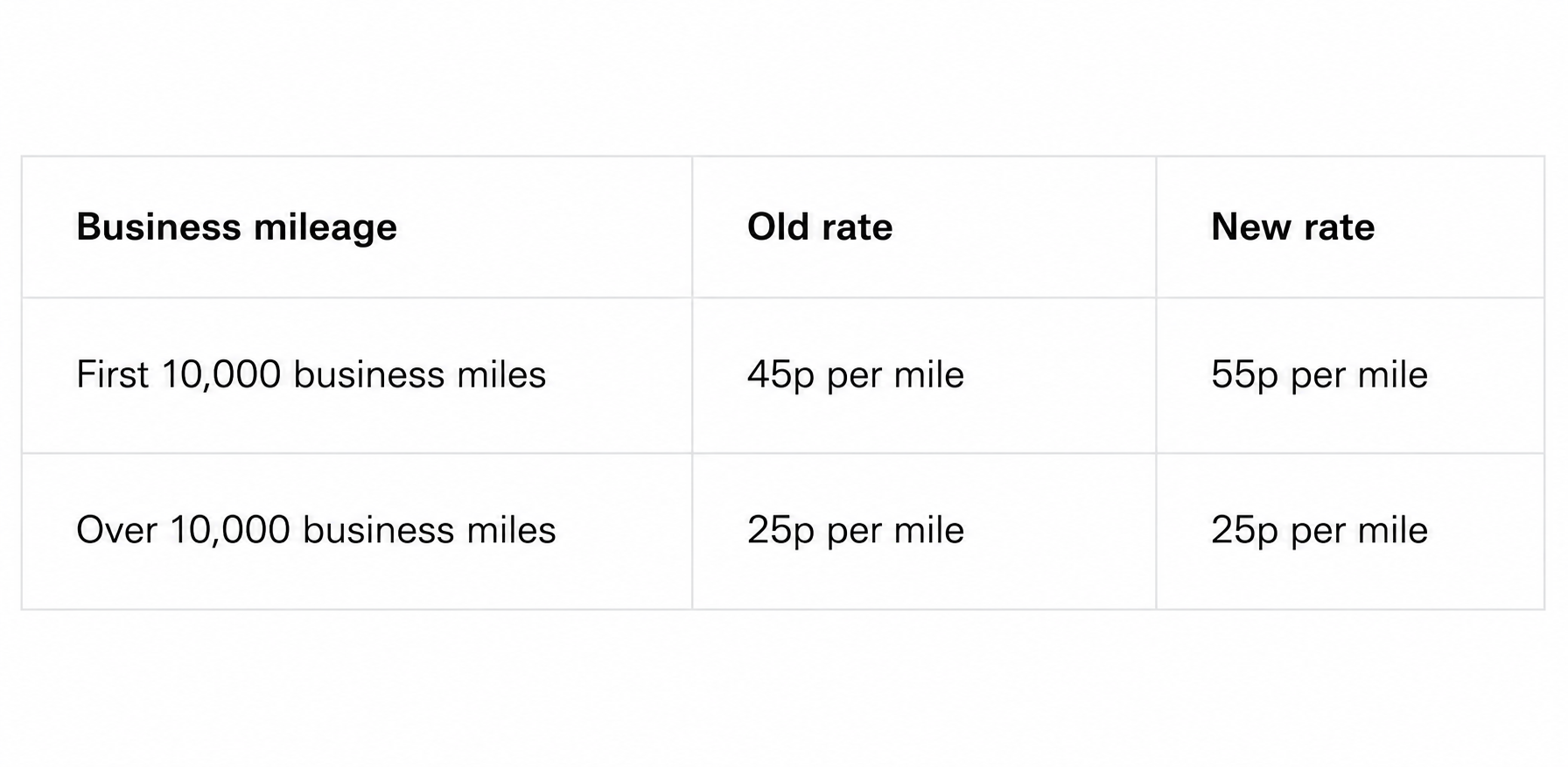
HMRC’s updated guidance confirms that motorcycles remain at 24p per mile, while bicycles remain at 20p per mile.
Why This Change Matters
This is more than just a small tax update. It reflects how much the cost of business travel has changed over the last decade and a half.
Fuel prices, insurance premiums, maintenance costs, tyres, servicing and general vehicle running costs have all placed more pressure on drivers and businesses. For employees who use their own vehicle for work, the old 45p rate often felt outdated.
The increase to 55p per mile gives businesses more room to reimburse staff fairly while keeping payments within HMRC’s approved tax-free limits.
A Simple Example
An employee driving 10,000 business miles per year could now receive up to:
10,000 miles x 55p = £5,500 tax-free
Under the old rate, the same mileage would have allowed:
10,000 miles x 45p = £4,500 tax-free
That means an employee covering 10,000 business miles could receive up to £1,000 more per year tax-free compared with the previous rate.
What Businesses Should Do Now
Businesses should take this as a good opportunity to review their mileage policies. Payroll systems, expense claim forms, staff handbooks and internal reimbursement processes may all need updating to reflect the new HMRC rate.
It is also worth checking whether employees are being reimbursed at the approved rate, below it, or above it. If an employer pays less than the approved mileage rate, employees may be able to claim mileage allowance relief on the difference. If an employer pays above HMRC’s approved rate, the excess may be treated as taxable income.
For companies with staff regularly travelling between sites, attending meetings, visiting customers, or using personal vehicles for business journeys, this change could affect annual budgets and travel expenses.
What It Means for Company Vehicle Decisions
This update may also encourage businesses to look more closely at how their teams travel. While mileage reimbursement can be useful, regular high-mileage business use may raise a bigger question: is relying on personal vehicles still the best option?
For some businesses, a company car, leased vehicle, salary sacrifice scheme, pool car, or managed fleet solution may offer more consistency, control and visibility over costs.
That is especially true for businesses looking at electric vehicles, where running costs, charging arrangements, Benefit-in-Kind tax and workplace charging options can all play a role in the overall decision.
A Good Time to Review Your Vehicle Policy
With the HMRC mileage rate increasing, now is a smart time for businesses to take a fresh look at their travel and vehicle policies.
The key questions are simple:
Are staff being reimbursed correctly?
Are mileage claims easy to track?
Are business travel costs becoming harder to manage?
Would a leased vehicle or fleet solution offer better value?
Could electric vehicles reduce long-term running costs?
Small policy updates now could help businesses avoid confusion later, while also making sure employees are treated fairly when using their own vehicles for work.
Final Thoughts
The increase from 45p to 55p per mile is a welcome change for many employees and business owners. After 15 years without an increase, the new rate better reflects the real cost of business travel in today’s market.
For businesses, this is not just an admin update. It is a chance to review mileage claims, payroll processes, travel policies and wider vehicle strategy.
Whether your team uses personal vehicles, company cars, vans, EVs or a mixed fleet, keeping on top of these changes can help you manage costs more effectively and make smarter decisions for the road ahead.
Need help reviewing your business vehicle options? Express Vehicle Contracts can support you with car leasing, van leasing, fleet solutions and EV consultancy to help your business stay moving.